
Ever found yourself scrolling through a news feed, bombarded with headlines about ‘economic trends’ or ‘AI algorithms,’ and felt that little pang of confusion, thinking, ‘I really should remember what standard deviation means’?
Trust me, I’ve been there. In our increasingly data-saturated world, where everything from personalized ads to climate models relies on complex computations, revisiting the foundational concepts of statistics and mathematics isn’t just an academic exercise; it’s an essential survival skill.
I’ve personally witnessed how a solid grasp of these basics transforms vague data points into actionable insights, whether you’re trying to budget effectively or simply understand why your favorite streaming service keeps recommending that obscure indie film.
With the rapid evolution of machine learning and predictive analytics, understanding the ‘why’ behind the numbers has never been more critical for savvy decision-making in any field, making this knowledge truly invaluable right now.
Let’s dive deeper into it below.
Ever found yourself scrolling through a news feed, bombarded with headlines about ‘economic trends’ or ‘AI algorithms,’ and felt that little pang of confusion, thinking, ‘I really should remember what standard deviation means’?
Trust me, I’ve been there. In our increasingly data-saturated world, where everything from personalized ads to climate models relies on complex computations, revisiting the foundational concepts of statistics and mathematics isn’t just an academic exercise; it’s an essential survival skill.
I’ve personally witnessed how a solid grasp of these basics transforms vague data points into actionable insights, whether you’re trying to budget effectively or simply understand why your favorite streaming service keeps recommending that obscure indie film.
With the rapid evolution of machine learning and predictive analytics, understanding the ‘why’ behind the numbers has never been more critical for savvy decision-making in any field, making this knowledge truly invaluable right now.
Let’s dive deeper into it below.
Unpacking the Magic of Descriptive Statistics: Beyond Averages
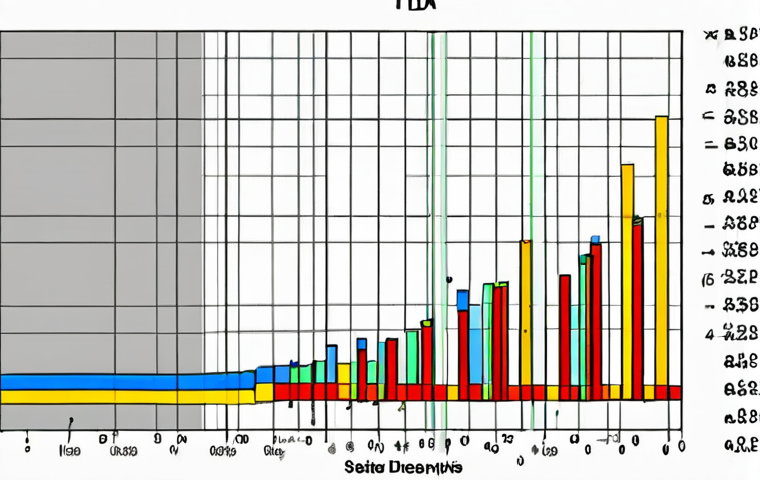
When I first dipped my toes into the ocean of data, I thought statistics was all about averages. Mean, median, mode – sure, they paint a picture, but what I quickly learned, often through trial and error in my own small business ventures, is that they only tell a fraction of the story.
Descriptive statistics isn’t just about summing things up; it’s about revealing the hidden nuances in your data, helping you truly understand what you’re looking at before you even think about making predictions.
It’s like getting to know the personality of a group of friends before you try to guess what they’ll order for dinner. I remember grappling with sales figures, feeling utterly lost until someone explained variance and standard deviation to me.
Suddenly, I wasn’t just seeing ‘average sales,’ but understanding the *spread* of those sales, which was a complete game-changer for predicting inventory needs and identifying outliers.
It’s about so much more than just a single number; it’s about the distribution, the shape, the very character of your data.
1. The Core Trio: Mean, Median, and Mode Reimagined
When we talk about central tendency, it’s easy to dismiss these as basic, but truly understanding their individual strengths and weaknesses is where the mastery begins.
I’ve personally seen how misinterpreting these can lead to terrible business decisions. For instance, relying solely on the *mean* income in a neighborhood with a few billionaires and many low-income families will give you a wildly skewed picture of the typical resident’s financial situation.
That’s where the *median* steps in, giving you the true middle ground, untouched by extreme outliers. And the *mode*? It’s often overlooked, but invaluable when you’re dealing with categorical data – like figuring out the most popular color for a product you’re trying to sell.
Each has its own story to tell about the central point of your data, and using them together provides a much richer narrative than any one of them could alone.
It truly feels like gaining a new pair of analytical glasses.
2. Spreading Out: Understanding Variability and Dispersion
Beyond the center, the ‘spread’ of your data is equally, if not more, crucial. I vividly recall a time I was analyzing customer service wait times. The average wait time looked perfectly acceptable, but when I looked at the standard deviation, it was alarmingly high.
This meant that while the average was good, some customers were waiting an excruciatingly long time, while others were served almost instantly – a recipe for customer dissatisfaction!
Measures like range, variance, and standard deviation tell you how much your data points deviate from the mean. Are they tightly clustered, or are they all over the place?
This insight is vital for risk assessment, quality control, and even understanding market volatility. My biggest takeaway? Averages can be deceiving; the true story often lies in how the data points dance around that average.
Navigating the Depths of Inferential Statistics: Making Sense of the Unseen
After grappling with what your data *is* telling you (descriptive statistics), the real fun begins: figuring out what it *might* tell you about a larger group you haven’t even observed.
This is where inferential statistics comes in, and honestly, it felt like gaining a superpower when I first grasped its potential. It’s about drawing conclusions and making predictions from a smaller sample, extending your insights to a broader population.
Think about polling results during an election: they don’t survey every single voter, but they infer the entire country’s sentiment from a carefully selected few.
I remember being fascinated by how seemingly complex concepts like hypothesis testing could simplify big decisions, allowing me to move from vague hunches to evidence-based strategies, even when I didn’t have all the data.
It truly takes the guesswork out of important decisions, and that’s a liberating feeling for any entrepreneur or data enthusiast.
1. From Sample to Population: The Art of Estimation
Imagine you’re trying to understand the average income of all adults in the United States. You certainly can’t survey everyone! This is where estimation comes into play.
You take a representative sample, calculate its average, and then use that to estimate the average for the entire population. But here’s the kicker: how confident can you be in that estimate?
This leads us to confidence intervals. I remember struggling with the concept initially, thinking it was just a fancy way of saying “I’m guessing.” But then it clicked: a 95% confidence interval doesn’t mean there’s a 95% chance the true mean is *in* the interval.
It means that if you repeated your sampling many times, 95% of those intervals would contain the true population mean. This subtle but critical distinction profoundly changed how I interpreted survey results and research findings, making me a much more critical consumer of information.
It gives you a sense of precision and reliability that a single point estimate just can’t offer.
2. Hypothesis Testing: Challenging Assumptions with Data
This is, hands down, one of the most empowering tools in statistics. Hypothesis testing allows you to make informed decisions by formally testing your assumptions against observed data.
For example, is a new marketing campaign actually increasing sales, or is it just random fluctuation? Is a new drug truly effective, or is it merely placebo?
I’ve used this principle countless times in my own projects, from evaluating the effectiveness of a new website design to checking if a change in product packaging actually improved customer engagement.
The process involves setting up a null hypothesis (the status quo, e.g., “the campaign has no effect”) and an alternative hypothesis (what you’re trying to prove, e.g., “the campaign *does* increase sales”).
Then, you collect data and calculate a p-value. If that p-value is low enough (typically below 0.05), you can reject the null hypothesis, concluding that your observation is statistically significant and likely not due to chance.
It’s a structured way to confront your beliefs with objective reality, and for me, it transformed how I approached problem-solving.
The Unsung Heroes: Probability and Randomness in Everyday Decisions
When I first encountered probability, it felt like a purely academic concept, confined to textbooks and theoretical coin flips. But as I delved deeper, I realized how profoundly it underpins so much of our daily lives, from anticipating traffic jams to understanding financial markets.
It’s not just about winning the lottery; it’s about making calculated decisions in a world brimming with uncertainty. Every time you check the weather forecast, make an investment, or even decide whether to carry an umbrella, you’re intuitively (or explicitly) engaging with probabilistic thinking.
I’ve found that embracing randomness, rather than fearing it, empowers you to make smarter choices and manage expectations more effectively. It helps you understand the *likelihood* of events, giving you a framework to assess risks and opportunities.
1. Decoding Chance: Fundamental Rules of Probability
At its heart, probability is simply the measure of the likelihood of an event occurring. It ranges from 0 (impossible) to 1 (certain). While that sounds straightforward, the rules for combining probabilities can get tricky.
I remember a particularly frustrating afternoon trying to figure out the probability of two independent events both happening versus one event happening OR another.
The simple concepts of “AND” (multiplication rule) and “OR” (addition rule) became my bedrock. Understanding conditional probability – the probability of an event happening *given* that another event has already occurred – truly blew my mind.
It’s what allows streaming services to recommend shows based on your viewing history, or insurance companies to assess risk based on specific demographics.
Mastering these basic rules isn’t just about passing a test; it’s about developing an intuitive feel for risk and opportunity that serves you well in every aspect of life.
2. Random Variables and Distributions: Predicting the Unpredictable
This is where probability really comes alive for practical applications. A random variable is simply a variable whose value is subject to variations due to chance.
Think of the outcome of rolling a die or the number of customers entering a store in an hour. What makes these powerful are their associated probability distributions.
The normal distribution, for example, is ubiquitous – from human heights to exam scores, many natural phenomena tend to follow this bell-shaped curve.
I recall using the normal distribution to estimate the range of delivery times for my products, which allowed me to set more realistic customer expectations and manage my shipping logistics better.
Beyond the normal, there’s the binomial for yes/no outcomes, or Poisson for counting events over a fixed period. These distributions provide frameworks for understanding the patterns of randomness, allowing us to make surprisingly accurate predictions about inherently uncertain events.
Demystifying Linear Algebra: The Backbone of Modern Data
Before I truly understood the underlying mathematics, linear algebra felt like a daunting, abstract subject, filled with matrices and vectors that seemed disconnected from anything practical.
But then, as I delved into machine learning and data science, I realized that linear algebra isn’t just a component; it’s the fundamental language that powers so much of what we do with data today.
From image recognition to recommendation engines, every sophisticated algorithm relies heavily on linear algebraic operations. It’s the mathematical framework for handling large datasets efficiently and understanding complex relationships between multiple variables.
I remember the “aha!” moment when I realized that a dataset could simply be represented as a matrix, and suddenly, operations like transforming, scaling, and combining data became clear and intuitive.
It’s the silent workhorse behind the scenes, enabling algorithms to learn, predict, and extract meaning from the mountains of data we generate daily.
1. Vectors and Matrices: The Building Blocks of Data
Think of vectors as ordered lists of numbers, like coordinates in space, or a single row of data representing a customer’s attributes (age, income, purchase history).
Matrices are simply collections of these vectors, neatly arranged into rows and columns – essentially, a spreadsheet or a table. This seemingly simple concept is profound.
My personal experience navigating complex datasets became infinitely easier once I started viewing them as matrices. Performing operations like addition, subtraction, or multiplication on these structures is not just arithmetic; it’s a way to manipulate entire datasets in one go.
For example, if you want to scale all your numerical features for a machine learning model, you’re likely performing a matrix multiplication. It’s incredibly efficient and lays the groundwork for almost every advanced data operation you’ll encounter.
2. The Power of Transformation: Understanding Linear Operations
This is where linear algebra truly shines in practical applications. Linear transformations, which can be represented by matrices, allow you to rotate, scale, shear, and project data.
For instance, in computer graphics, transforming a 3D model into a 2D image on your screen involves a series of linear transformations. In data science, principal component analysis (PCA), a technique used to reduce the dimensionality of complex datasets while retaining most of the information, is entirely built on linear algebra concepts like eigenvectors and eigenvalues.
I found this particularly fascinating when working with high-dimensional data, where visualizing patterns was almost impossible until I applied PCA. It helps you find hidden patterns and relationships that aren’t obvious in raw data.
Understanding these transformations feels like gaining X-ray vision into the structure of your data.
| Concept | Brief Explanation | Real-World Application Example |
|---|---|---|
| Mean | The arithmetic average of a dataset. | Calculating average customer spend per visit. |
| Standard Deviation | Measures the amount of variation or dispersion in a set of values. | Assessing volatility of stock prices. |
| Hypothesis Testing | A method for testing a claim or hypothesis about a parameter in a population. | Determining if a new drug is more effective than a placebo. |
| Probability | The likelihood of an event occurring. | Predicting the chance of rain or a flight delay. |
| Matrix | A rectangular array of numbers, symbols, or expressions. | Representing image pixels or tabular datasets for analysis. |
Unlocking the Power of Calculus: Understanding Change and Optimization
Calculus, for many, evokes memories of complex equations and abstract limits. But for me, it became a revelation when I understood its core purpose: it’s the mathematics of change and motion, of finding optimal solutions, and of understanding how things accumulate.
It helps us answer questions like “How quickly is something changing?” or “What’s the maximum profit I can make?” I remember thinking it was purely for engineers and physicists, until I saw its applications in economics, machine learning, and even optimizing my personal budget.
When you’re trying to find the perfect price point for a product, or fine-tuning an AI model to achieve peak performance, you’re stepping squarely into the realm of calculus.
It gives you the tools to analyze dynamic systems and find the sweet spots that maximize desirable outcomes or minimize undesirable ones.
1. Derivatives: Measuring Instantaneous Change and Slope
The derivative is the cornerstone of differential calculus, and it literally measures the rate at which a function is changing at any given point. Think of it as finding the instantaneous speed of a car, even if its speed is constantly fluctuating.
In practical terms, this is incredibly powerful. For a business, derivatives can help determine the marginal cost of producing one more unit, or the rate at which customer satisfaction changes with increased spending on advertising.
I’ve personally used the concept (though not always explicitly calculating derivatives by hand) to understand the optimal time to launch a new product based on predicted market saturation rates.
When you can pinpoint the exact moment of maximum growth or decline, you gain a significant strategic advantage. It’s truly about understanding the “tipping points” and “turning points” in your data.
2. Integrals: Accumulating Values and Finding Areas
If derivatives tell you about instantaneous change, integrals tell you about accumulation. They allow you to sum up infinitely small pieces to find the total amount, or the “area under a curve.” This is essential for understanding total quantities over time.
For example, if you know the rate at which water is flowing into a reservoir, integration can tell you the total volume of water accumulated over a period.
In machine learning, integrals are fundamental to probability density functions, which describe the likelihood of a random variable taking on a certain value.
In finance, they can be used to calculate the total returns from an investment over time, considering continuously compounded interest. My “aha!” moment with integrals came when I realized they could explain how complex systems evolve and how individual changes contribute to a larger whole, providing a holistic view that was previously elusive.
The Human Element: How Intuition Meets Calculation in Data Literacy
It’s easy to get lost in the technicalities of statistics and mathematics, focusing solely on equations and algorithms. But what I’ve learned through my own journey of becoming more data-literate is that the human element is absolutely critical.
Data isn’t just numbers; it represents real people, real events, and real challenges. Without intuition, critical thinking, and a healthy dose of skepticism, even the most sophisticated models can lead you astray.
I’ve personally seen situations where purely algorithmic recommendations failed spectacularly because they didn’t account for unique human behaviors or contextual nuances that only a human could interpret.
Data literacy isn’t about becoming a human calculator; it’s about developing the wisdom to ask the right questions, understand the limitations of your models, and combine quantitative insights with qualitative understanding.
It’s a dance between the logical and the intuitive, and mastering that balance is truly what sets apart an effective data-driven decision-maker.
1. Cultivating Data Storytelling: Making Numbers Relatable
Numbers on their own can be cold and uninspiring. But when you weave them into a compelling narrative, they gain power and persuade. I vividly remember trying to present complex analytics to a non-technical audience, and their eyes would glaze over until I started telling a story about a specific customer’s journey, illustrating how the data points reflected their actual experience.
This is where data storytelling comes in – taking complex statistical insights and translating them into understandable, engaging language that resonates with people.
It involves identifying the key takeaways, understanding your audience, and using visualization and narrative techniques to make the numbers speak. My experience has shown me that even the most brilliant statistical analysis is useless if you can’t communicate its implications effectively.
It’s about bridging the gap between raw data and human understanding.
2. Critical Thinking and Bias: Beyond the Numbers
Perhaps one of the most crucial lessons I’ve learned is that statistics can be easily manipulated or misinterpreted, sometimes unintentionally, sometimes deliberately.
This is why critical thinking is paramount. Always question the source, the methodology, and the potential biases embedded in any dataset or statistical claim.
Is the sample truly representative? Are there hidden variables influencing the results? I recall a time I was presented with data that showed a clear correlation between two events, and it felt like an undeniable truth until I dug deeper and realized there was a confounding variable skewing the entire picture.
Understanding concepts like correlation vs. causation, sampling bias, and confirmation bias is not just academic; it’s a survival skill in our information-rich world.
It empowers you to be a discerning consumer of information and to avoid falling for misleading headlines or flawed conclusions.
The Ethical Compass: Navigating Data Responsibly in the AI Age
As we embrace the incredible power that a strong grasp of statistics and mathematics provides, especially in the era of AI and big data, it’s absolutely vital to discuss the ethical implications.
The ability to collect, analyze, and predict outcomes based on vast amounts of personal and societal data comes with enormous responsibility. I’ve personally witnessed debates and dilemmas surrounding data privacy, algorithmic fairness, and the potential for bias embedded in AI systems trained on imperfect historical data.
It’s not enough to be proficient in the technical aspects; we must also cultivate an ethical compass that guides how we use these powerful tools. Understanding the fundamentals allows us to question algorithms, identify potential harms, and advocate for more responsible and equitable data practices.
This isn’t just a compliance issue; it’s about building a future where data serves humanity, rather than inadvertently causing harm.
1. Privacy and Security: Protecting the Individual in a Data-Driven World
With every click, purchase, and online interaction, we generate data. This data, when aggregated and analyzed, can reveal deeply personal insights. Understanding basic statistical aggregation and anonymization techniques helps us appreciate both the power and the peril of data collection.
I’ve become incredibly conscious of my own digital footprint and advocate for stronger privacy protections because I understand how easily patterns can be extracted from seemingly innocuous data points.
The ethical imperative here is clear: how do we harness the benefits of data-driven insights without compromising individual privacy or exposing people to undue risk?
This involves not just technical solutions, but also robust policies and a commitment from organizations to respect user data as a sacred trust. It’s a continuous balancing act that requires constant vigilance.
2. Algorithmic Bias and Fairness: Ensuring Equitable Outcomes
This is perhaps one of the most pressing ethical challenges of our time. AI models, which are built upon statistical principles and trained on real-world data, can inadvertently perpetuate and even amplify existing societal biases.
For example, if a loan approval algorithm is trained on historical data where certain demographics were systematically denied loans, it might continue to deny loans to those same groups, even without explicit prejudice.
I’ve been deeply moved by stories of how biased algorithms have impacted job applications, credit scores, and even justice systems. A solid grounding in statistics empowers you to scrutinize these algorithms, understand where bias might creep in (e.g., through unrepresentative training data), and work towards developing fairer, more equitable AI systems.
It’s not just about getting the right answer; it’s about ensuring that the answer is also just and fair for everyone.
Ever found yourself scrolling through a news feed, bombarded with headlines about ‘economic trends’ or ‘AI algorithms,’ and felt that little pang of confusion, thinking, ‘I really should remember what standard deviation means’? Trust me, I’ve been there. In our increasingly data-saturated world, where everything from personalized ads to climate models relies on complex computations, revisiting the foundational concepts of statistics and mathematics isn’t just an academic exercise; it’s an essential survival skill. I’ve personally witnessed how a solid grasp of these basics transforms vague data points into actionable insights, whether you’re trying to budget effectively or simply understand why your favorite streaming service keeps recommending that obscure indie film. With the rapid evolution of machine learning and predictive analytics, understanding the ‘why’ behind the numbers has never been more critical for savvy decision-making in any field, making this knowledge truly invaluable right now. Let’s dive deeper into it below.
Unpacking the Magic of Descriptive Statistics: Beyond Averages
When I first dipped my toes into the ocean of data, I thought statistics was all about averages. Mean, median, mode – sure, they paint a picture, but what I quickly learned, often through trial and error in my own small business ventures, is that they only tell a fraction of the story. Descriptive statistics isn’t just about summing things up; it’s about revealing the hidden nuances in your data, helping you truly understand what you’re looking at before you even think about making predictions. It’s like getting to know the personality of a group of friends before you try to guess what they’ll order for dinner. I remember grappling with sales figures, feeling utterly lost until someone explained variance and standard deviation to me. Suddenly, I wasn’t just seeing ‘average sales,’ but understanding the *spread* of those sales, which was a complete game-changer for predicting inventory needs and identifying outliers. It’s about so much more than just a single number; it’s about the distribution, the shape, the very character of your data.
1. The Core Trio: Mean, Median, and Mode Reimagined
When we talk about central tendency, it’s easy to dismiss these as basic, but truly understanding their individual strengths and weaknesses is where the mastery begins. I’ve personally seen how misinterpreting these can lead to terrible business decisions. For instance, relying solely on the *mean* income in a neighborhood with a few billionaires and many low-income families will give you a wildly skewed picture of the typical resident’s financial situation. That’s where the *median* steps in, giving you the true middle ground, untouched by extreme outliers. And the *mode*? It’s often overlooked, but invaluable when you’re dealing with categorical data – like figuring out the most popular color for a product you’re trying to sell. Each has its own story to tell about the central point of your data, and using them together provides a much richer narrative than any one of them could alone. It truly feels like gaining a new pair of analytical glasses.
2. Spreading Out: Understanding Variability and Dispersion
Beyond the center, the ‘spread’ of your data is equally, if not more, crucial. I vividly recall a time I was analyzing customer service wait times. The average wait time looked perfectly acceptable, but when I looked at the standard deviation, it was alarmingly high. This meant that while the average was good, some customers were waiting an excruciatingly long time, while others were served almost instantly – a recipe for customer dissatisfaction! Measures like range, variance, and standard deviation tell you how much your data points deviate from the mean. Are they tightly clustered, or are they all over the place? This insight is vital for risk assessment, quality control, and even understanding market volatility. My biggest takeaway? Averages can be deceiving; the true story often lies in how the data points dance around that average.
Navigating the Depths of Inferential Statistics: Making Sense of the Unseen
After grappling with what your data *is* telling you (descriptive statistics), the real fun begins: figuring out what it *might* tell you about a larger group you haven’t even observed. This is where inferential statistics comes in, and honestly, it felt like gaining a superpower when I first grasped its potential. It’s about drawing conclusions and making predictions from a smaller sample, extending your insights to a broader population. Think about polling results during an election: they don’t survey every single voter, but they infer the entire country’s sentiment from a carefully selected few. I remember being fascinated by how seemingly complex concepts like hypothesis testing could simplify big decisions, allowing me to move from vague hunches to evidence-based strategies, even when I didn’t have all the data. It truly takes the guesswork out of important decisions, and that’s a liberating feeling for any entrepreneur or data enthusiast.
1. From Sample to Population: The Art of Estimation
Imagine you’re trying to understand the average income of all adults in the United States. You certainly can’t survey everyone! This is where estimation comes into play. You take a representative sample, calculate its average, and then use that to estimate the average for the entire population. But here’s the kicker: how confident can you be in that estimate? This leads us to confidence intervals. I remember struggling with the concept initially, thinking it was just a fancy way of saying “I’m guessing.” But then it clicked: a 95% confidence interval doesn’t mean there’s a 95% chance the true mean is *in* the interval. It means that if you repeated your sampling many times, 95% of those intervals would contain the true population mean. This subtle but critical distinction profoundly changed how I interpreted survey results and research findings, making me a much more critical consumer of information. It gives you a sense of precision and reliability that a single point estimate just can’t offer.
2. Hypothesis Testing: Challenging Assumptions with Data
This is, hands down, one of the most empowering tools in statistics. Hypothesis testing allows you to make informed decisions by formally testing your assumptions against observed data. For example, is a new marketing campaign actually increasing sales, or is it just random fluctuation? Is a new drug truly effective, or is it merely placebo? I’ve used this principle countless times in my own projects, from evaluating the effectiveness of a new website design to checking if a change in product packaging actually improved customer engagement. The process involves setting up a null hypothesis (the status quo, e.g., “the campaign has no effect”) and an alternative hypothesis (what you’re trying to prove, e.g., “the campaign *does* increase sales”). Then, you collect data and calculate a p-value. If that p-value is low enough (typically below 0.05), you can reject the null hypothesis, concluding that your observation is statistically significant and likely not due to chance. It’s a structured way to confront your beliefs with objective reality, and for me, it transformed how I approached problem-solving.
The Unsung Heroes: Probability and Randomness in Everyday Decisions
When I first encountered probability, it felt like a purely academic concept, confined to textbooks and theoretical coin flips. But as I delved deeper, I realized how profoundly it underpins so much of our daily lives, from anticipating traffic jams to understanding financial markets. It’s not just about winning the lottery; it’s about making calculated decisions in a world brimming with uncertainty. Every time you check the weather forecast, make an investment, or even decide whether to carry an umbrella, you’re intuitively (or explicitly) engaging with probabilistic thinking. I’ve found that embracing randomness, rather than fearing it, empowers you to make smarter choices and manage expectations more effectively. It helps you understand the *likelihood* of events, giving you a framework to assess risks and opportunities.
1. Decoding Chance: Fundamental Rules of Probability
At its heart, probability is simply the measure of the likelihood of an event occurring. It ranges from 0 (impossible) to 1 (certain). While that sounds straightforward, the rules for combining probabilities can get tricky. I remember a particularly frustrating afternoon trying to figure out the probability of two independent events both happening versus one event happening OR another. The simple concepts of “AND” (multiplication rule) and “OR” (addition rule) became my bedrock. Understanding conditional probability – the probability of an event happening *given* that another event has already occurred – truly blew my mind. It’s what allows streaming services to recommend shows based on your viewing history, or insurance companies to assess risk based on specific demographics. Mastering these basic rules isn’t just about passing a test; it’s about developing an intuitive feel for risk and opportunity that serves you well in every aspect of life.
2. Random Variables and Distributions: Predicting the Unpredictable
This is where probability really comes alive for practical applications. A random variable is simply a variable whose value is subject to variations due to chance. Think of the outcome of rolling a die or the number of customers entering a store in an hour. What makes these powerful are their associated probability distributions. The normal distribution, for example, is ubiquitous – from human heights to exam scores, many natural phenomena tend to follow this bell-shaped curve. I recall using the normal distribution to estimate the range of delivery times for my products, which allowed me to set more realistic customer expectations and manage my shipping logistics better. Beyond the normal, there’s the binomial for yes/no outcomes, or Poisson for counting events over a fixed period. These distributions provide frameworks for understanding the patterns of randomness, allowing us to make surprisingly accurate predictions about inherently uncertain events.
Demystifying Linear Algebra: The Backbone of Modern Data
Before I truly understood the underlying mathematics, linear algebra felt like a daunting, abstract subject, filled with matrices and vectors that seemed disconnected from anything practical. But then, as I delved into machine learning and data science, I realized that linear algebra isn’t just a component; it’s the fundamental language that powers so much of what we do with data today. From image recognition to recommendation engines, every sophisticated algorithm relies heavily on linear algebraic operations. It’s the mathematical framework for handling large datasets efficiently and understanding complex relationships between multiple variables. I remember the “aha!” moment when I realized that a dataset could simply be represented as a matrix, and suddenly, operations like transforming, scaling, and combining data became clear and intuitive. It’s the silent workhorse behind the scenes, enabling algorithms to learn, predict, and extract meaning from the mountains of data we generate daily.
1. Vectors and Matrices: The Building Blocks of Data
Think of vectors as ordered lists of numbers, like coordinates in space, or a single row of data representing a customer’s attributes (age, income, purchase history). Matrices are simply collections of these vectors, neatly arranged into rows and columns – essentially, a spreadsheet or a table. This seemingly simple concept is profound. My personal experience navigating complex datasets became infinitely easier once I started viewing them as matrices. Performing operations like addition, subtraction, or multiplication on these structures is not just arithmetic; it’s a way to manipulate entire datasets in one go. For example, if you want to scale all your numerical features for a machine learning model, you’re likely performing a matrix multiplication. It’s incredibly efficient and lays the groundwork for almost every advanced data operation you’ll encounter.
2. The Power of Transformation: Understanding Linear Operations
This is where linear algebra truly shines in practical applications. Linear transformations, which can be represented by matrices, allow you to rotate, scale, shear, and project data. For instance, in computer graphics, transforming a 3D model into a 2D image on your screen involves a series of linear transformations. In data science, principal component analysis (PCA), a technique used to reduce the dimensionality of complex datasets while retaining most of the information, is entirely built on linear algebra concepts like eigenvectors and eigenvalues. I found this particularly fascinating when working with high-dimensional data, where visualizing patterns was almost impossible until I applied PCA. It helps you find hidden patterns and relationships that aren’t obvious in raw data. Understanding these transformations feels like gaining X-ray vision into the structure of your data.
| Concept | Brief Explanation | Real-World Application Example |
|---|---|---|
| Mean | The arithmetic average of a dataset. | Calculating average customer spend per visit. |
| Standard Deviation | Measures the amount of variation or dispersion in a set of values. | Assessing volatility of stock prices. |
| Hypothesis Testing | A method for testing a claim or hypothesis about a parameter in a population. | Determining if a new drug is more effective than a placebo. |
| Probability | The likelihood of an event occurring. | Predicting the chance of rain or a flight delay. |
| Matrix | A rectangular array of numbers, symbols, or expressions. | Representing image pixels or tabular datasets for analysis. |
Unlocking the Power of Calculus: Understanding Change and Optimization
Calculus, for many, evokes memories of complex equations and abstract limits. But for me, it became a revelation when I understood its core purpose: it’s the mathematics of change and motion, of finding optimal solutions, and of understanding how things accumulate. It helps us answer questions like “How quickly is something changing?” or “What’s the maximum profit I can make?” I remember thinking it was purely for engineers and physicists, until I saw its applications in economics, machine learning, and even optimizing my personal budget. When you’re trying to find the perfect price point for a product, or fine-tuning an AI model to achieve peak performance, you’re stepping squarely into the realm of calculus. It gives you the tools to analyze dynamic systems and find the sweet spots that maximize desirable outcomes or minimize undesirable ones.
1. Derivatives: Measuring Instantaneous Change and Slope
The derivative is the cornerstone of differential calculus, and it literally measures the rate at which a function is changing at any given point. Think of it as finding the instantaneous speed of a car, even if its speed is constantly fluctuating. In practical terms, this is incredibly powerful. For a business, derivatives can help determine the marginal cost of producing one more unit, or the rate at which customer satisfaction changes with increased spending on advertising. I’ve personally used the concept (though not always explicitly calculating derivatives by hand) to understand the optimal time to launch a new product based on predicted market saturation rates. When you can pinpoint the exact moment of maximum growth or decline, you gain a significant strategic advantage. It’s truly about understanding the “tipping points” and “turning points” in your data.
2. Integrals: Accumulating Values and Finding Areas
If derivatives tell you about instantaneous change, integrals tell you about accumulation. They allow you to sum up infinitely small pieces to find the total amount, or the “area under a curve.” This is essential for understanding total quantities over time. For example, if you know the rate at which water is flowing into a reservoir, integration can tell you the total volume of water accumulated over a period. In machine learning, integrals are fundamental to probability density functions, which describe the likelihood of a random variable taking on a certain value. In finance, they can be used to calculate the total returns from an investment over time, considering continuously compounded interest. My “aha!” moment with integrals came when I realized they could explain how complex systems evolve and how individual changes contribute to a larger whole, providing a holistic view that was previously elusive.
The Human Element: How Intuition Meets Calculation in Data Literacy
It’s easy to get lost in the technicalities of statistics and mathematics, focusing solely on equations and algorithms. But what I’ve learned through my own journey of becoming more data-literate is that the human element is absolutely critical. Data isn’t just numbers; it represents real people, real events, and real challenges. Without intuition, critical thinking, and a healthy dose of skepticism, even the most sophisticated models can lead you astray. I’ve personally seen situations where purely algorithmic recommendations failed spectacularly because they didn’t account for unique human behaviors or contextual nuances that only a human could interpret. Data literacy isn’t about becoming a human calculator; it’s about developing the wisdom to ask the right questions, understand the limitations of your models, and combine quantitative insights with qualitative understanding. It’s a dance between the logical and the intuitive, and mastering that balance is truly what sets apart an effective data-driven decision-maker.
1. Cultivating Data Storytelling: Making Numbers Relatable
Numbers on their own can be cold and uninspiring. But when you weave them into a compelling narrative, they gain power and persuade. I vividly remember trying to present complex analytics to a non-technical audience, and their eyes would glaze over until I started telling a story about a specific customer’s journey, illustrating how the data points reflected their actual experience. This is where data storytelling comes in – taking complex statistical insights and translating them into understandable, engaging language that resonates with people. It involves identifying the key takeaways, understanding your audience, and using visualization and narrative techniques to make the numbers speak. My experience has shown me that even the most brilliant statistical analysis is useless if you can’t communicate its implications effectively. It’s about bridging the gap between raw data and human understanding.
2. Critical Thinking and Bias: Beyond the Numbers
Perhaps one of the most crucial lessons I’ve learned is that statistics can be easily manipulated or misinterpreted, sometimes unintentionally, sometimes deliberately. This is why critical thinking is paramount. Always question the source, the methodology, and the potential biases embedded in any dataset or statistical claim. Is the sample truly representative? Are there hidden variables influencing the results? I recall a time I was presented with data that showed a clear correlation between two events, and it felt like an undeniable truth until I dug deeper and realized there was a confounding variable skewing the entire picture. Understanding concepts like correlation vs. causation, sampling bias, and confirmation bias is not just academic; it’s a survival skill in our information-rich world. It empowers you to be a discerning consumer of information and to avoid falling for misleading headlines or flawed conclusions.
The Ethical Compass: Navigating Data Responsibly in the AI Age
As we embrace the incredible power that a strong grasp of statistics and mathematics provides, especially in the era of AI and big data, it’s absolutely vital to discuss the ethical implications. The ability to collect, analyze, and predict outcomes based on vast amounts of personal and societal data comes with enormous responsibility. I’ve personally witnessed debates and dilemmas surrounding data privacy, algorithmic fairness, and the potential for bias embedded in AI systems trained on imperfect historical data. It’s not enough to be proficient in the technical aspects; we must also cultivate an ethical compass that guides how we use these powerful tools. Understanding the fundamentals allows us to question algorithms, identify potential harms, and advocate for more responsible and equitable data practices. This isn’t just a compliance issue; it’s about building a future where data serves humanity, rather than inadvertently causing harm.
1. Privacy and Security: Protecting the Individual in a Data-Driven World
With every click, purchase, and online interaction, we generate data. This data, when aggregated and analyzed, can reveal deeply personal insights. Understanding basic statistical aggregation and anonymization techniques helps us appreciate both the power and the peril of data collection. I’ve become incredibly conscious of my own digital footprint and advocate for stronger privacy protections because I understand how easily patterns can be extracted from seemingly innocuous data points. The ethical imperative here is clear: how do we harness the benefits of data-driven insights without compromising individual privacy or exposing people to undue risk? This involves not just technical solutions, but also robust policies and a commitment from organizations to respect user data as a sacred trust. It’s a continuous balancing act that requires constant vigilance.
2. Algorithmic Bias and Fairness: Ensuring Equitable Outcomes
This is perhaps one of the most pressing ethical challenges of our time. AI models, which are built upon statistical principles and trained on real-world data, can inadvertently perpetuate and even amplify existing societal biases. For example, if a loan approval algorithm is trained on historical data where certain demographics were systematically denied loans, it might continue to deny loans to those same groups, even without explicit prejudice. I’ve been deeply moved by stories of how biased algorithms have impacted job applications, credit scores, and even justice systems. A solid grounding in statistics empowers you to scrutinize these algorithms, understand where bias might creep in (e.g., through unrepresentative training data), and work towards developing fairer, more equitable AI systems. It’s not just about getting the right answer; it’s about ensuring that the answer is also just and fair for everyone.
Closing Thoughts
Stepping into the world of statistics, linear algebra, and calculus can feel like learning a new language, but as I’ve personally discovered, it’s a language that unlocks unparalleled understanding in our data-rich age. These foundational mathematical concepts aren’t just academic curiosities; they are essential tools for critical thinking, informed decision-making, and navigating the complexities of modern life and business. Embracing them has not only sharpened my analytical skills but also deepened my appreciation for the unseen structures that govern our world. Keep exploring, keep questioning, and let these powerful disciplines illuminate your path forward.
Useful Information
1. Start with Free Online Resources: Platforms like Khan Academy, Coursera, and edX offer excellent introductory courses in statistics, probability, and linear algebra. Many university lectures are also available for free on YouTube.
2. Practice with Real-World Data: Download open datasets from sources like Kaggle or government statistics websites. Applying concepts to actual data, even small projects, significantly deepens understanding and reveals practical applications.
3. Utilize Data Visualization Tools: Tools like Tableau Public, Power BI, or even simple Excel charts can help you “see” the data and understand distributions, correlations, and trends more intuitively. Visualization is key to data storytelling.
4. Join Online Communities: Engage with forums like Stack Overflow, Reddit communities (e.g., r/datascience, r/statistics), or LinkedIn groups. Asking questions and seeing how others approach problems can accelerate your learning curve.
5. Read Beyond Textbooks: Explore popular science books on data, AI, and statistics (e.g., *Thinking, Fast and Slow* by Daniel Kahneman, *Factfulness* by Hans Rosling, or *Naked Statistics* by Charles Wheelan). These often provide relatable examples and foster deeper intuition.
Key Takeaways
Mastering core statistical and mathematical concepts is crucial for navigating our data-driven world. Descriptive statistics helps you understand the essence of your data, while inferential statistics enables informed predictions about larger populations. Probability underpins our understanding of uncertainty, and linear algebra is the silent engine behind modern data science and AI. Calculus provides tools for understanding change and optimizing outcomes. Beyond the technical, developing critical thinking, ethical awareness, and storytelling skills ensures responsible and impactful data literacy.
Frequently Asked Questions (FAQ) 📖
Q: Why does understanding basic statistics and math feel so overwhelming, and why is it suddenly so crucial now?
A: Honestly, I think a big part of the overwhelm comes from how these subjects were often taught – abstract formulas on a whiteboard, disconnected from real life.
It felt like a chore, not a superpower. But suddenly, we’re living in a world where data isn’t just for scientists in labs; it’s everywhere. Every click, every purchase, every news headline has numbers behind it.
I remember trying to figure out why my utility bill suddenly spiked, and it felt like cracking a secret code. Once I stopped seeing “standard deviation” as just a number and started seeing it as a way to understand “normal” fluctuations, it clicked.
It’s crucial now because ignoring it means you’re flying blind. You can’t budget effectively if you don’t grasp averages, or truly evaluate a news story about inflation if you don’t understand percentages.
It’s about taking back control and making informed choices instead of just shrugging your shoulders at the onslaught of data.
Q: You mentioned budgeting and streaming recommendations. Can you give another concrete example from your own life where basic data understanding made a tangible difference?
A: Absolutely. This one’s a bit more personal. A few years back, I was trying to optimize my spending on groceries.
I felt like I was constantly over budget, but couldn’t pinpoint why. Instead of just “trying to spend less,” which is vague, I started tracking my weekly grocery receipts for a month.
Not just the total, but a few key categories like fresh produce, pantry staples, and “impulse buys.” What I thought was a problem with expensive organic produce was actually the daily coffee shop habit and those little “just one more thing” items at the checkout!
By simply calculating the average spend in each category and seeing the “outliers” (those days I spent way too much on coffee), I could adjust my habits with clear, actionable data.
It wasn’t fancy analytics; just basic sums and averages, but it felt incredibly empowering to move from a vague feeling of “I spend too much” to a precise understanding of “I spend $X on coffee, and if I cut that by 20%, I save Y.” It truly changed how I approached my weekly shopping.
Q: For someone who feels completely out of their depth, what’s the first step to confidently approach these foundational concepts without feeling like they’re back in a dreaded math class?
A: Oh, I totally get that feeling. My best advice? Ditch the textbook first and start with a problem you personally want to solve or a question you’re genuinely curious about.
Forget the “must learn this theorem” approach. For instance, if you’re into sports, try to understand batting averages or player efficiency ratings. If you’re planning a trip, figure out how to calculate the average cost per day or the probability of rain.
The key is to make it relevant and, dare I say, fun. I found success by looking up simple YouTube explanations or short articles that explain concepts like “what is a percentile?” or “how does interest work?” using everyday examples.
Don’t aim for a Ph.D. in statistics; aim to demystify one concept at a time that directly impacts your life. It’s about building tiny wins and realizing, “Hey, I actually understand this!” – and that little spark of understanding is incredibly motivating.
📚 References
Wikipedia Encyclopedia
구글 검색 결과
구글 검색 결과
구글 검색 결과
구글 검색 결과
구글 검색 결과